Technique
Restaurants don't sear better than you. Their pans just don't lose the heat.
Same steak, same burner, two different results. The difference is decided in the seconds after the meat hits the metal, and it is built into the pan.
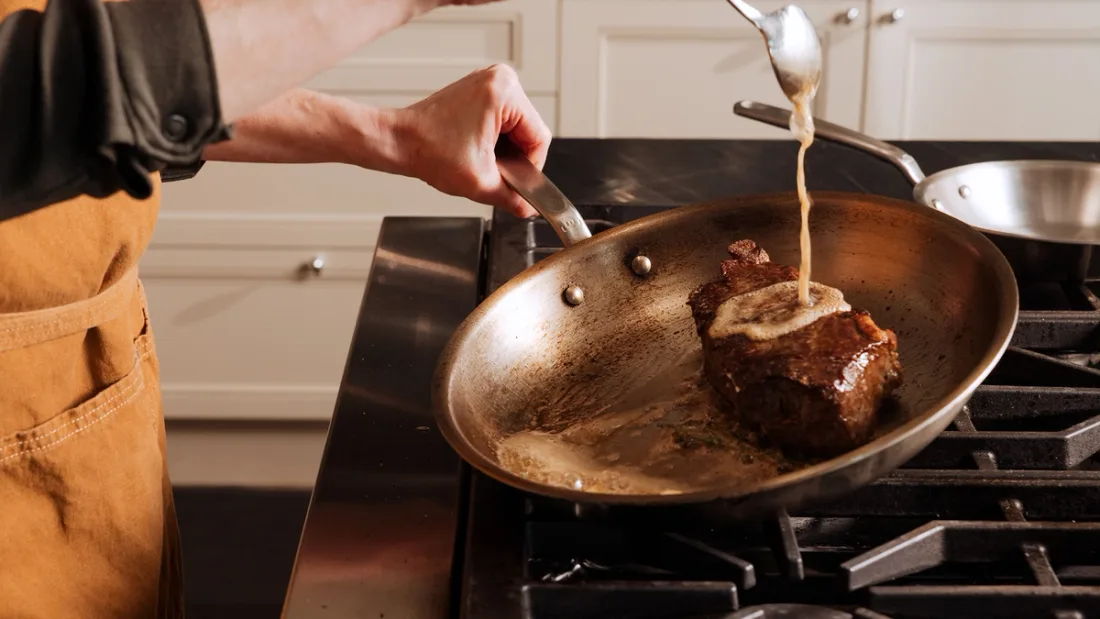
You did everything the recipe said. The pan came up to heat, the oil shimmered, the steak went in and roared. Then, a few seconds in, the roar dropped to a mutter. A ring of grey liquid crept out from under the meat. You lifted a corner to check and the underside was the color of a wet paper bag.
Most people conclude they are bad at cooking steak. Almost nobody concludes what actually happened, which is that the pan stopped being hot.
Made In, the cookware brand whose pans turn up in a lot of professional kitchens, publishes an unusually plain explanation of this on its own site. Co-founder Chip Malt lists what a real sear depends on: high heat, direct metal to protein contact, surface moisture evaporation, and the Maillard reaction, the chemistry that produces browning and flavor. Take away any one and you get the wet paper bag.
The line that matters most is the third one. Surface moisture has to leave before browning can start. A cold steak arriving in a hot pan does two things at once: it pulls heat out of the metal, and it releases water onto it. If the surface cannot stay hot enough to drive that water off as fast as the meat gives it up, the water stays, and food sitting in its own water does not brown. It poaches.
The same steak, the same burner
What separates a crust from a grey band is whether the cooking surface stays above the point where the released juice boils off on contact.
Surface holds. Water leaves as steam, the metal touches dry protein, the crust builds.
Surface drops. The juice pools instead of evaporating, and the meat cooks in liquid.
Nothing in this picture is about how high you turned the burner. It is about what the pan does after the food lands on it.
The heat has to come back, and that is a question about metal
Preheating is the easy half. Every pan on the market will get hot if you leave it on a flame. What separates them is what happens next, when a cold piece of protein is sitting on the surface pulling heat out of it faster than the burner can put it back.
Two properties decide that. How much heat the pan is holding in reserve, which is a function of how much metal there is. And how quickly that reserve can travel to the spot under the steak, which is a function of what the metal is.
Stainless steel is durable, non reactive and takes high heat without complaint, which is why professional kitchens want a stainless cooking surface. It is also, on its own, a mediocre conductor. Aluminum is the opposite: it moves heat beautifully and it is useless as a cooking surface. Neither metal alone makes a good pan, which is the entire reason clad cookware exists.
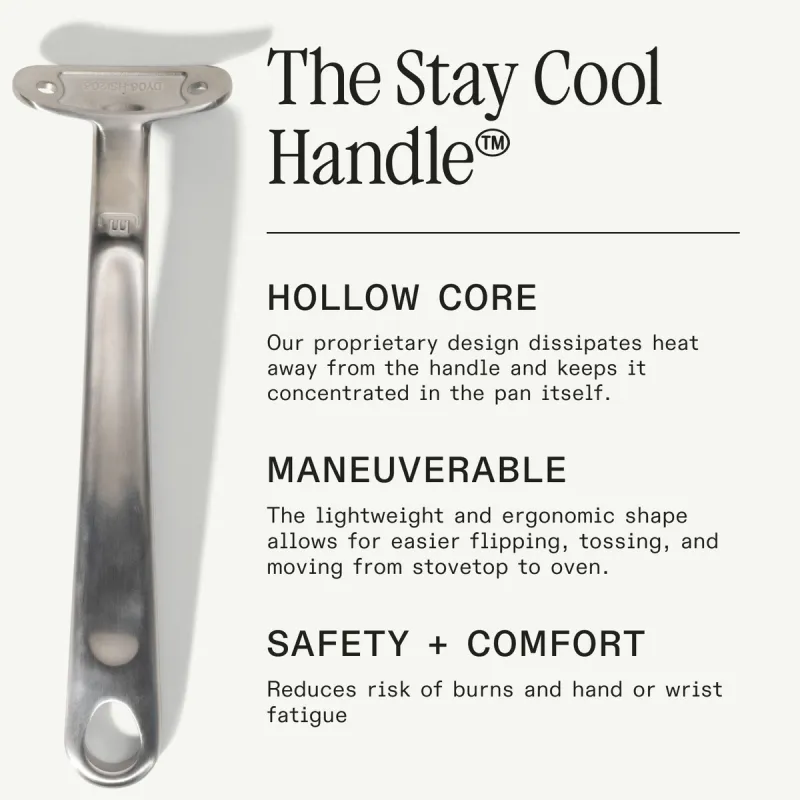
Made In's answer, and the reason its pans keep turning up on restaurant lines, is a bonded stack. Two layers of 18/10 stainless steel, meaning 18 percent chromium and 10 percent nickel, wrapped around an aluminum core, with two more bonding layers in between. Five layers, 2.7 millimeters thick.
Cross section of a 5-ply wall
Cut through the pan at the wall. Left is the middle of the base, right is the rim.
Layer thicknesses drawn to the proportions of a clad stack totaling 2.7 mm, the figure Made In publishes for this pan.
Look at where the orange stops in that drawing, because that is the part worth paying for. On this construction the core does not end where the base ends. It carries on around the curve and up to the rim, which is what the phrase fully clad means and what a lot of cheaper pans quietly skip by bonding a disc to the bottom and leaving the walls as thin single ply steel.
It matters for a specific and slightly unglamorous reason: the walls of a frying pan are not decorative. When you tilt the pan to baste, when you push vegetables up the side to hold them out of the fat, when the pan goes under a broiler, the walls are cooking too. A pan with a cold rim has a temperature map, and food finds the cold parts.
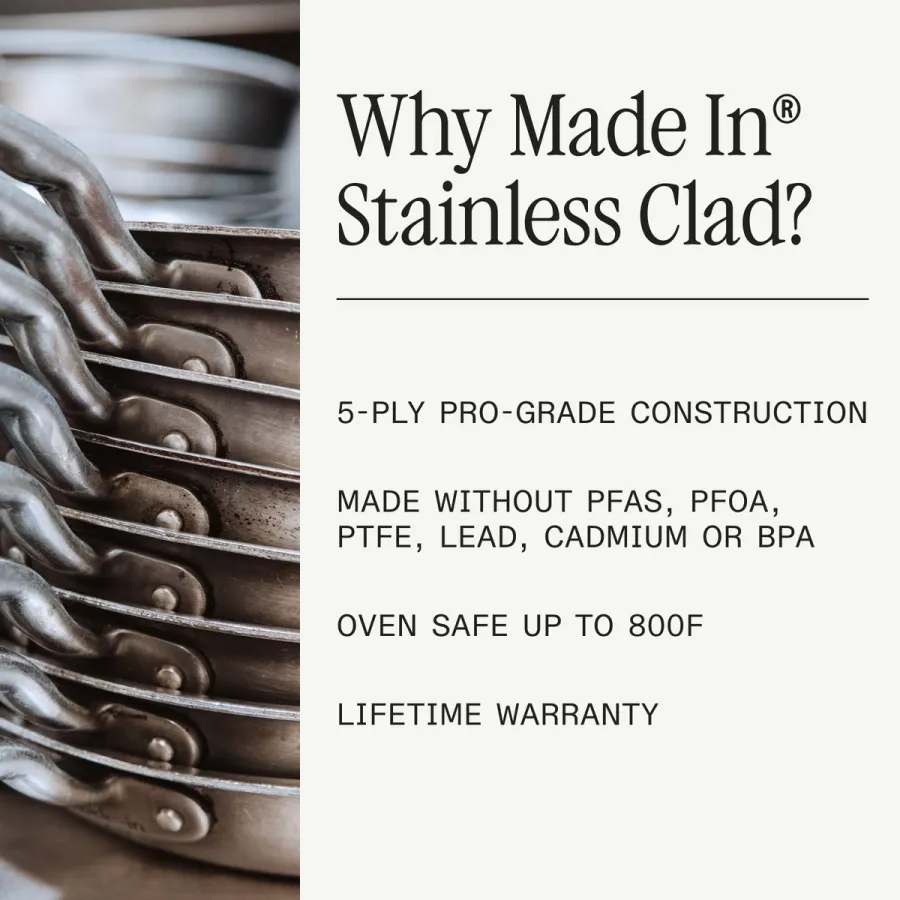
Construction, thickness and oven rating as published on madeincookware.com for the Stainless Clad Frying Pan, read August 13, 2026.
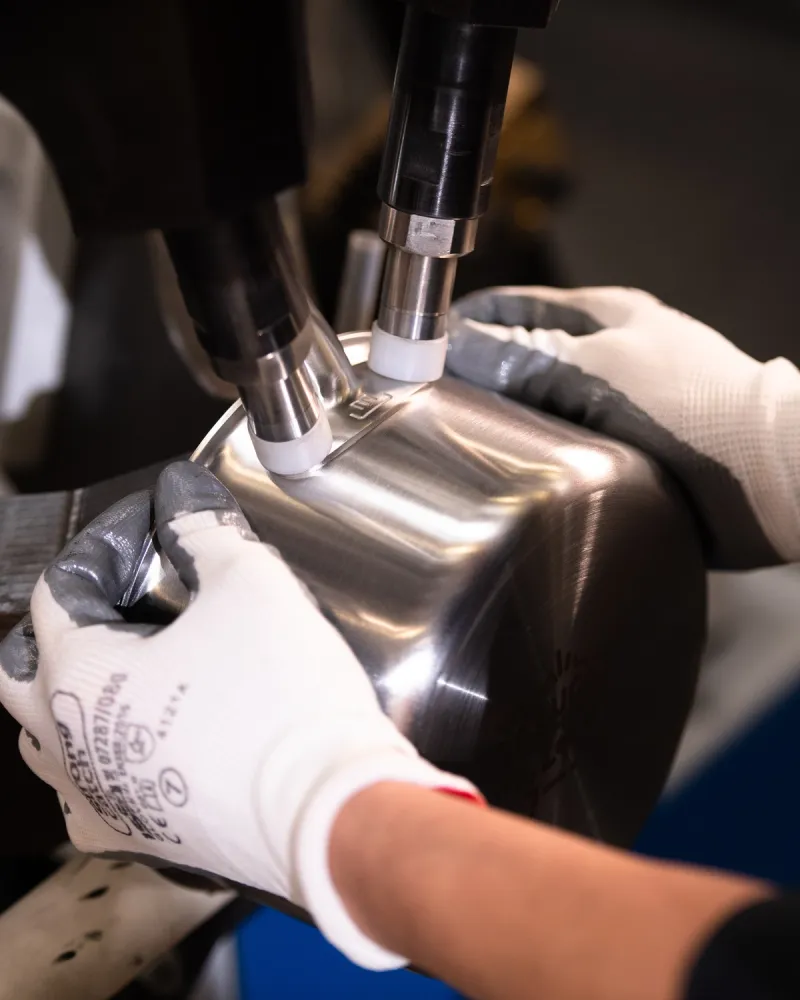
The test that tells you the pan is actually ready
Here is the practical half, and it costs nothing. Almost everyone who complains that stainless steel sticks is putting food in too early, and the reason is that a stainless pan gives you no visual signal. Non stick pans train you to trust your eyes. Bare metal looks exactly the same warm as it does searing hot.
Made In publishes the professional workaround, which is a physics trick you can run in two seconds. Heat the pan dry, then flick in a small splash of water and watch what the water does.
The water test, three readings
Preheat the pan dry, with nothing in it, then add a small splash of water.
Too cool
The water splits into many tiny droplets and sputters. Wait.
Ready
One bead forms and dances across the surface. This is the Leidenfrost effect, and it is the signal to cook.
Too hot
The water evaporates instantly. Pull the pan off the heat for a moment.
The three readings are the ones Made In publishes in its own guide to cooking on stainless steel.
Once you have the dancing bead, the rest is a sequence, and the order is not negotiable.
- Preheat dry. Nothing in the pan. Medium heat, and give it time. This is the step people skip.
- Oil after, not before. Add the fat once the pan is at temperature and let it shimmer. Oil put into a cold pan sits there degrading while you wait.
- Put the food in and leave it alone. It will stick at first. Made In says so in plain language on its own site, and that is worth repeating because the sticking is what makes people panic and start moving things around.
- Let the crust release the food. As the crust forms, it lets go by itself. In the company's words, if you try to flip it too early and it resists, it isn't ready. When it lifts with almost no resistance, that is the crust telling you it is done.
You're not fighting the pan. You're working with it. Chip Malt, co-founder of Made In, in The Best Way to Sear a Steak? Stop Using Non-Stick
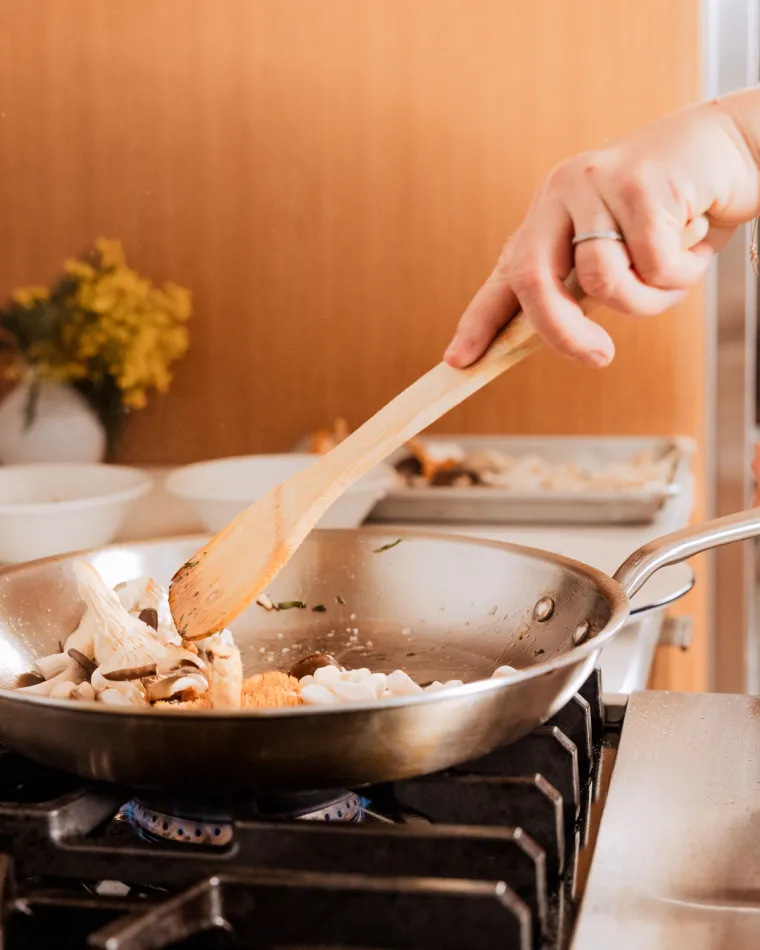
The brown film you have been washing down the sink
Turn the steak out onto a board and look at what is left behind. Those stuck brown patches are fond, and they are the most concentrated flavor in the entire dish. Pour in a splash of wine or stock, scrape while it bubbles, and the pan releases all of it into what is now a sauce. Made In puts the timing at seconds, and it is most of what separates a home plate from a restaurant one.
Made In's flat claim on this point is that non stick rarely develops proper fond, and the reason follows from what a non stick coating is for. A coating exists to stop food bonding to the surface. Fond is food bonding to the surface. You cannot have a pan that is excellent at preventing the first and also good at producing the second.
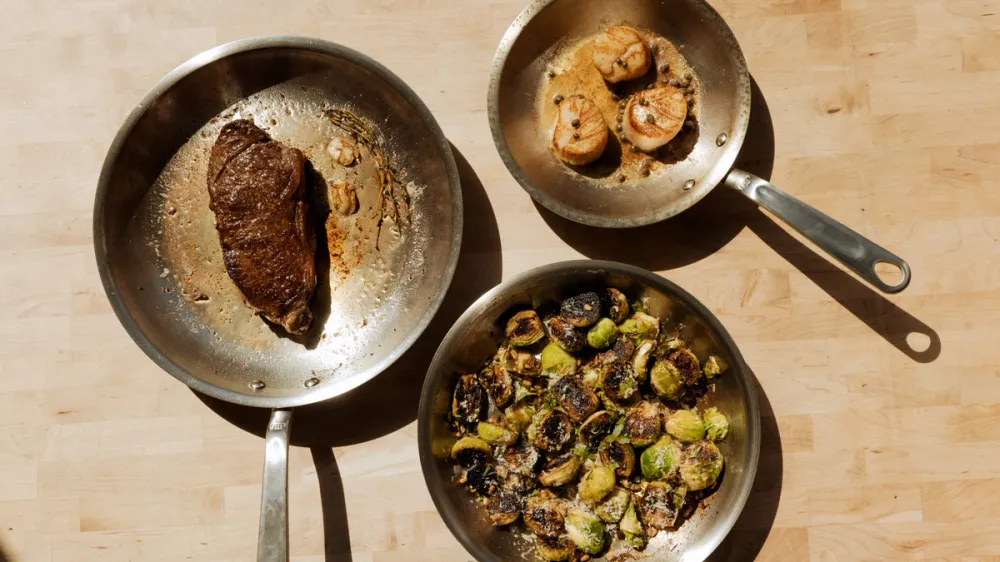
Non-stick prioritizes release. Stainless Clad prioritizes flavor. Chip Malt, co-founder of Made In
None of this makes non stick a bad object. It is the right tool for eggs, for delicate fish, for a crepe. It is simply a specialty tool that a lot of kitchens ended up using as their only tool, and searing is the job it is worst at.
Part four800 degrees is a working number, not a marketing one
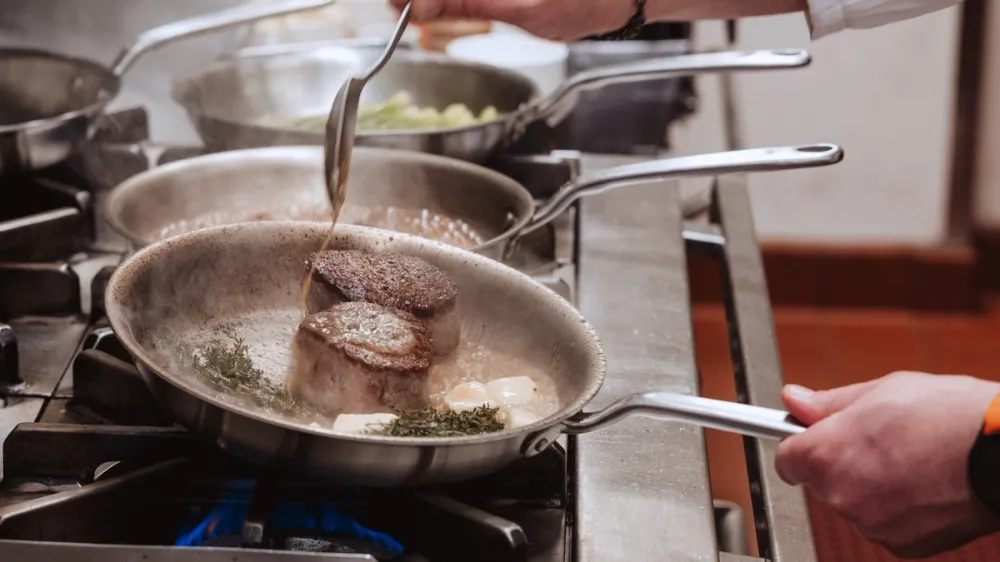
Made In rates the Stainless Clad line oven safe to 800°F. That number looks like brochure inflation until you watch a restaurant line work, because the standard professional move is not to finish a thick cut on the burner at all. You sear it hard on the stovetop, then move the whole pan into a very hot oven or under a salamander to bring the middle up while the crust holds.
A pan that cannot follow the food into that oven forces you to transfer the meat onto a tray, which costs you the fond, the fat, and a good part of the surface temperature you just built. The rating is what makes the technique available at home, and it is also why the handle is riveted stainless rather than something that softens.
Who is actually cooking on these
Cookware marketing is full of chef endorsements that mean a photograph was taken. Made In's position is unusually specific and unusually checkable: it says the chefs it features buy the cookware and use it in their restaurants, with no endorsement deals made behind the scenes, and it publishes their names and the addresses of their kitchens.
Those are the pans we use at Alinea. We're going to use the best pans in the world at one of the best restaurants in the world. Grant Achatz, chef of Alinea and owner of the Alinea Group, Chicago. Alinea has held three Michelin stars.
That is a load bearing sentence. Alinea is about as demanding an environment as a piece of equipment can be put in, and Made In's own account of the relationship is that this is not a logo deal or a product placement, but a working kitchen buying cookware.
 Tom ColicchioCraft Hospitality
New York City, NY
 Mashama BaileyThe Grey
Savannah, GA
 Brooke WilliamsonPlaya Provisions
Playa Del Rey, CA
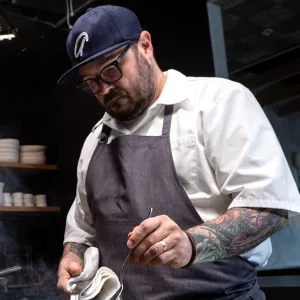 Sean BrockAudrey
Nashville, TN
 Edgar RicoNixta Taqueria
Austin, TX
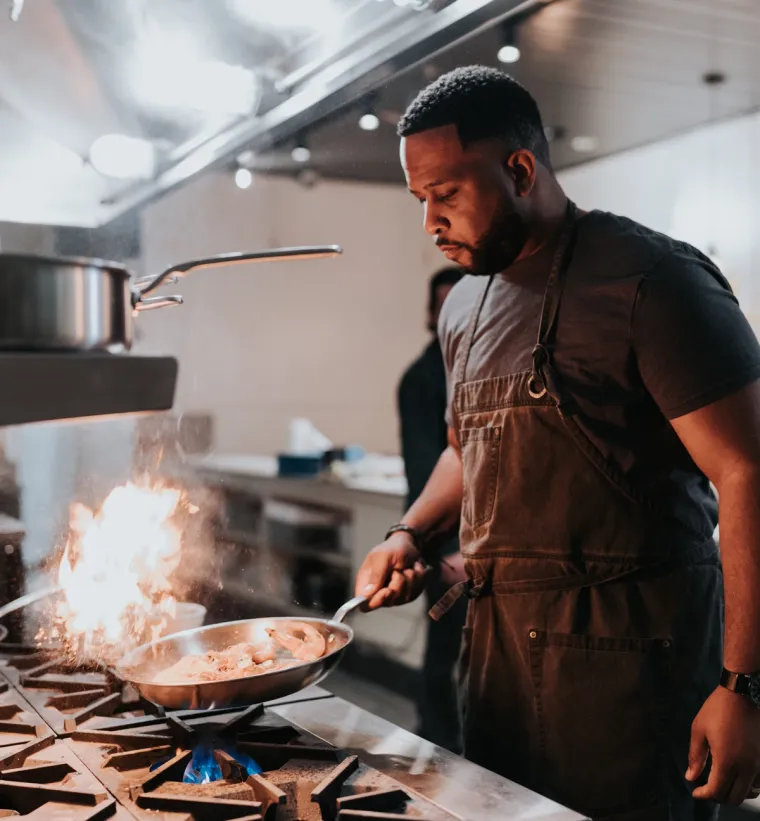 Matt HornHorn BBQ
Oakland, CA
Six of the chefs Made In lists on its own about page. The full roster there also includes Grant Achatz of Alinea, Niki Nakayama of n/naka, Johnny Spero of Bar Spero, Jo Chan of Bureau de Poste and Rob Rubba of Oyster Oyster.
We completely fitted the restaurant with Made In equipment and it is just killing it, we haven't dented a piece, lost a piece, lost a handle yet. Tom Colicchio, founder of Crafted Hospitality, New York
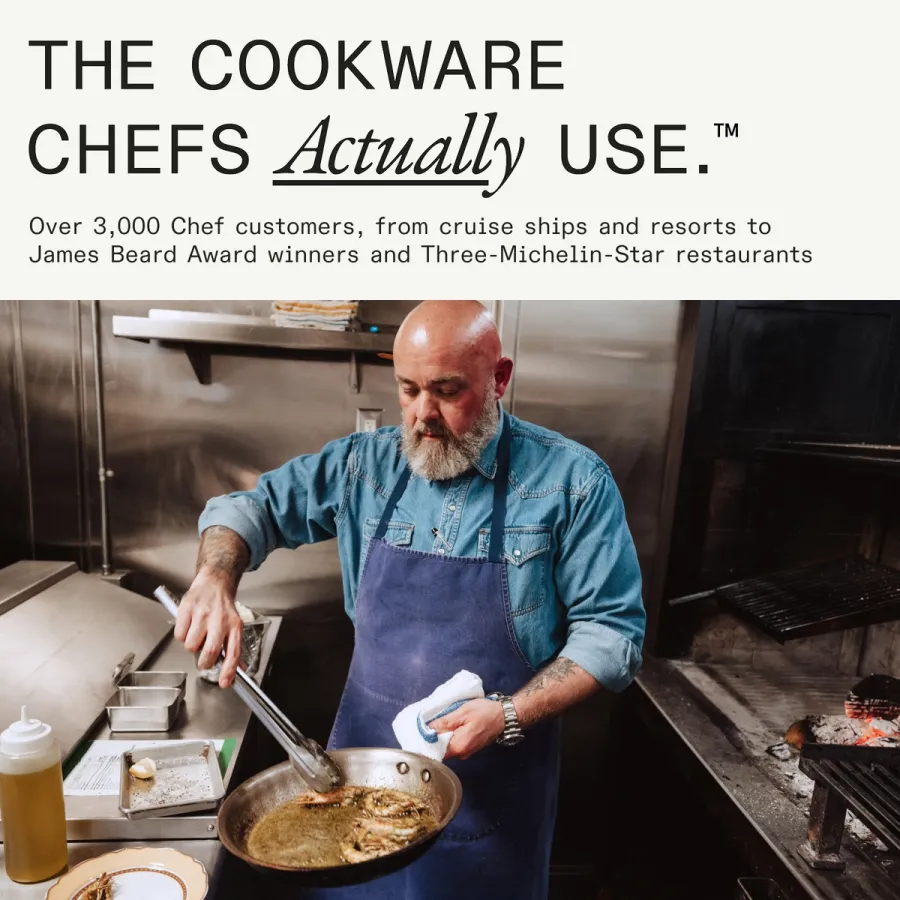
If you want to check rather than take anyone's word for it, Made In runs a searchable list of restaurants near you that cook on its equipment.
Find a restaurant near you that uses it Search Made In's restaurant list by location Part sixThe arithmetic of a pan that does not wear out
A Stainless Clad frying pan costs more than a non stick pan, and there is no honest way around that. The counter argument Made In makes is about replacement cycles rather than sticker price, and it is easy to check against your own cupboard.
The company's figure is that a non stick pan typically lasts one to three years before its performance declines, because the coating is a consumable that scratches and wears. A bonded stainless pan has no coating to fail. There is nothing on it that degrades, which is why it carries a lifetime warranty and why the same pans stay on restaurant lines for years.
Ten years in the same kitchen
Each white line marks a pan reaching the end of its useful life and being replaced.
Replacement interval as published by Made In. The marks are drawn at the middle of the range the company gives, not at a measured date.
There is a second cost that never appears on a receipt, which is the cooking you do not do. A pan that cannot take high heat quietly removes searing, fond and oven finishing from your repertoire, and you stop noticing that they are gone.
| Size | Cooking surface | Best for | Price |
|---|---|---|---|
| 8 inch | Smaller than the 10, same 5-ply wall | Eggs, one portion, a single fillet | $129 |
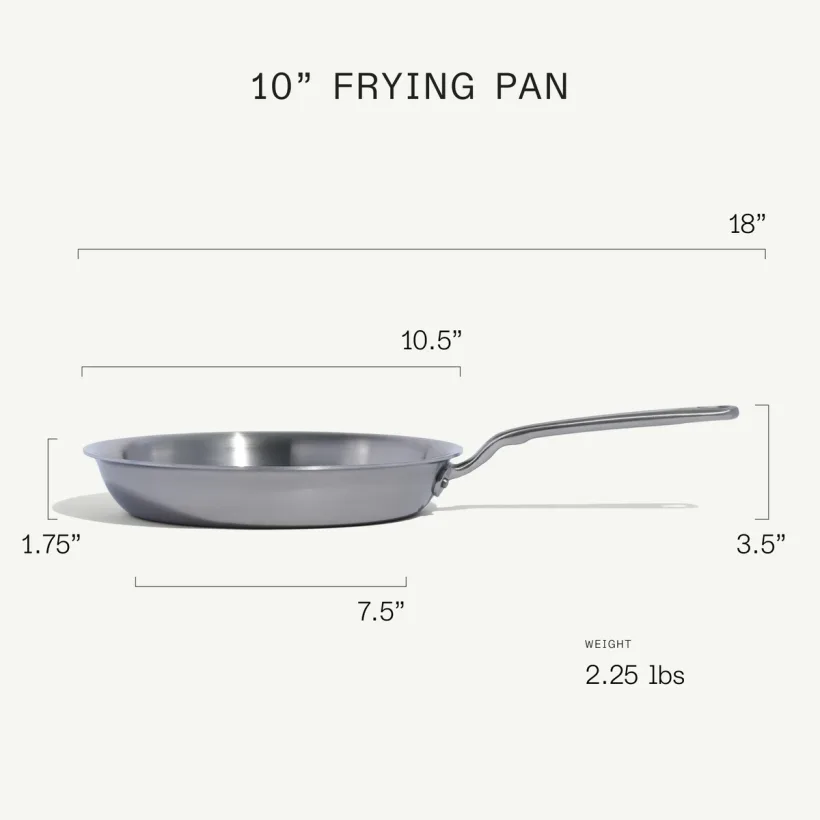
| 10 inch | 7.5 in. across, 2.25 lbs | The default. Steak for two, chicken thighs, pan sauces | $139 |
| 12 inch | Widest of the three | Family portions, browning in one batch | $149 |
Prices and dimensions as published on madeincookware.com for the United States on August 13, 2026, stainless handle. Made In also lists a 10 piece Stainless Clad set at $799.
What the people who bought one say
Aggregate rating and review count as displayed on madeincookware.com on August 13, 2026. Of those reviews, 147,075 are five star.
Both pans look beautiful and perform incredibly well. Even heat across the bottom, and when preheated correctly eggs just glide easily. Amazing quality.
M.Verified buyer · August 10, 2026, on the Stainless Clad Frying Pan Set
After buying the pot and pan set I knew I wanted to expand with this frying pan. The larger size comes in handy for bigger meals and the quality is top rate.
EricVerified buyer · August 11, 2026, on the Stainless Clad Frying Pan
Best pan on the market. Very heavy duty. Heats evenly and if used properly cleans up well.
Craig D.Verified buyer · on the Stainless Clad Frying Pan
It heats evenly, is lightweight and the handle stays cool. I would definitely recommend, it's worth the money.
Lana P.Verified buyer · on the Stainless Clad Frying Pan
I use them for almost everything now. Amazing quality and would recommend to everyone I know in the market for new pans.
Vince L.Verified buyer · on the Stainless Clad Frying Pan
The press verdicts Made In publishes point the same way. Food Network called it the best overall stainless steel frying pan. The Strategist called it truly a professional grade piece of cookware. USA Today's line is the most useful one for anyone hesitating on price: it will only set you back about half the price of more well established brands, yet beats or matches them for performance.
Which one to start with
Start with one pan, not a set. The 10 inch is the piece Made In describes as the workhorse of a professional kitchen, and it covers searing, sautéing, pan sauces and oven finishing. Add sizes only once you know which one you keep reaching for.
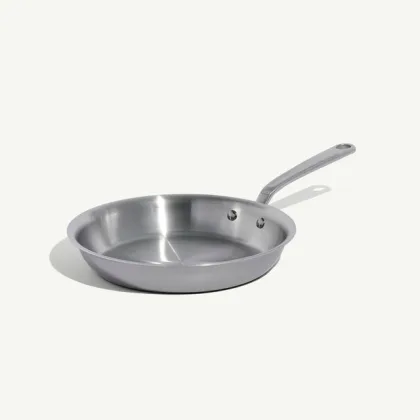 10 inch
The default. 7.5 in. cooking surface, 2.25 lbs.
$139 · See it
10 inch
The default. 7.5 in. cooking surface, 2.25 lbs.
$139 · See it
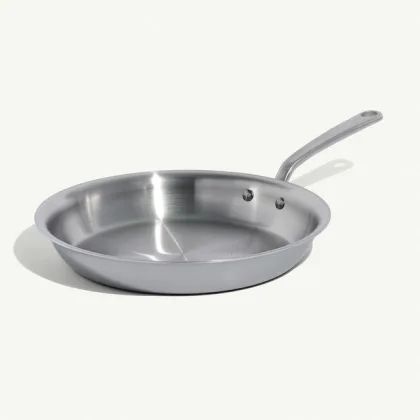 12 inch
For browning a whole batch without crowding.
$149 · See it
12 inch
For browning a whole batch without crowding.
$149 · See it
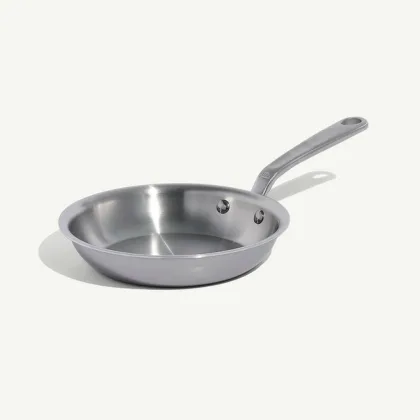 8 inch
One portion, eggs, a single fillet.
$129 · See it
8 inch
One portion, eggs, a single fillet.
$129 · See it
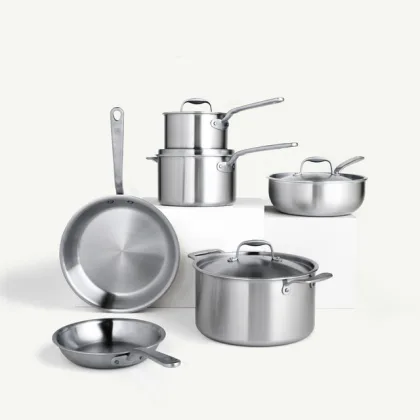 The full Stainless Clad line
Sauciers, saucepans, sauté pans, stock pots and sets.
10 piece set $799 · See it
The full Stainless Clad line
Sauciers, saucepans, sauté pans, stock pots and sets.
10 piece set $799 · See it
If it does not suit you, you are not stuck with it
Made In lists a 60 day risk free trial and a lifetime warranty on Stainless Clad, with no registration required, and free shipping on orders over $99 in the United States. Returns and exchanges are accepted for up to 60 days on most items within the contiguous US, with some exclusions.
Questions people ask first
Will food stick?
At first, yes, and Made In says so on its own site rather than pretending otherwise. Food bonds to the surface, then releases when the crust has formed. The sticking is the crust being built. What prevents it becoming a problem is preheating properly and not moving the food before it lets go.
Is it hard to clean?
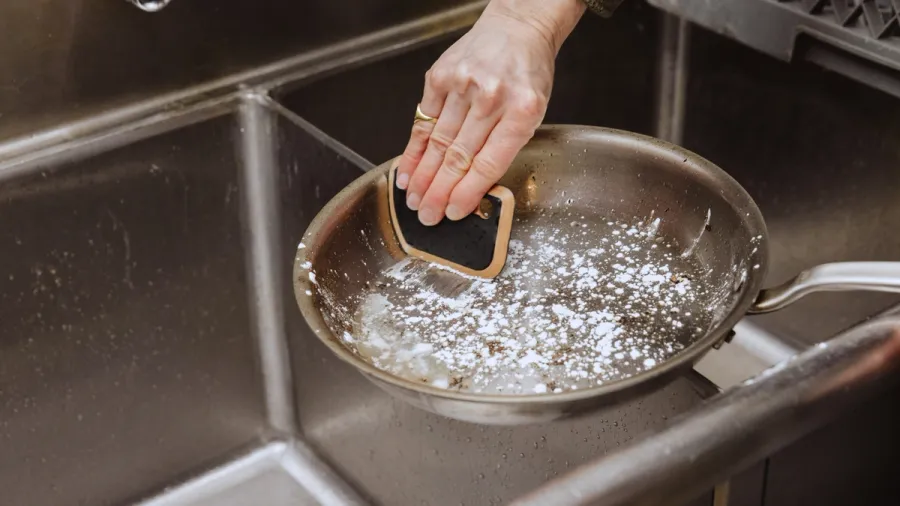
Made In's answer is to deglaze while the pan is still warm, which lifts most residue and gives you a sauce at the same time. For stubborn marks it recommends a mild abrasive cleaner. Because there is no coating, you are not damaging anything by scrubbing solid metal. The company lists handwash as preferred.
Does it work on induction?
Yes. Made In lists the Stainless Clad Frying Pan as compatible with gas, electric and induction cooktops, which is what the stainless exterior of the stack is for.
What is in the metal?
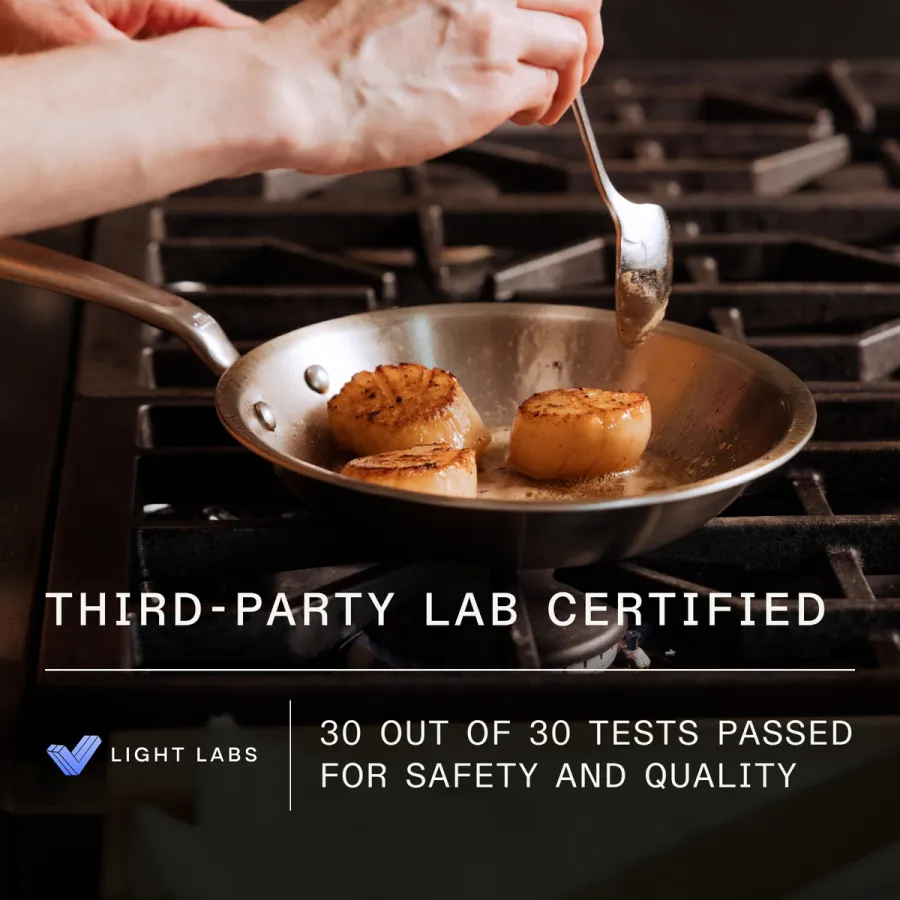
Made In states that Stainless Clad pieces are made without PFAS, PFOA, PTFE, lead, cadmium and BPA, and that the pans are third party tested under the European Food Contact Safety Regulations, reporting no safety concern for the classes tested.
Why is 18/10 stainless worth naming?
It refers to the alloy: 18 percent chromium, 10 percent nickel. The chromium is what makes it resist corrosion and stay unbothered by wine, tomato and citrus, which is the reason a pan sauce does not taste metallic.
The short version
Your steak comes out grey because the cooking surface loses its heat faster than the burner replaces it, and the meat ends up boiling in the water it released. That is a property of the pan, not of your technique.
What fixes it is mass in the right place and a metal that moves heat. Five bonded layers, an aluminum core that runs from the base all the way to the rim, a bare stainless surface that will let food bond to it, and a rating high enough to follow the food into the oven. Then one habit: preheat dry, wait for the bead of water to dance, and leave the food alone until it lets go.
Stainless steel isn't a gimmick. It's a standard. Chip Malt, co-founder of Made InStart with the 10 inch $139 · 60 day risk free trial · lifetime warranty